
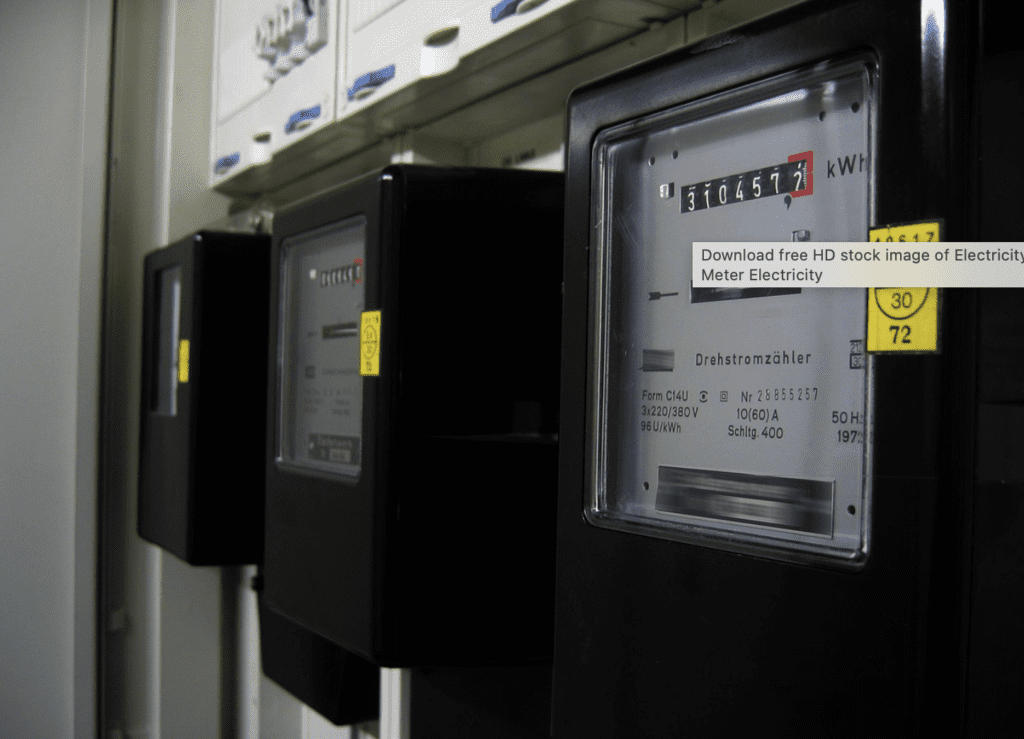
How to Calculate kWh From Watts: A Complete Guide for US Homeowners
Understanding how to calculate kWh from watts is one of the most practical skills you can develop as a homeowner or electrician. Whether you’re trying to estimate your monthly electric bill, size a generator, or understand your home’s energy consumption, this calculation is fundamental. The good news? It’s simpler than you might think, and we’re going to walk you through it step by step.
In this guide, you’ll learn the exact formula, see real-world examples using common US household appliances, and discover how to use online tools to make your calculations faster and more accurate.
What Is the Formula to Calculate kWh From Watts?
The basic formula to calculate kilowatt-hours (kWh) from watts is straightforward. Here’s what you need to know:
kWh = (Watts × Hours) ÷ 1,000
This formula tells you how much electrical energy a device consumes over a specific period. Kilowatt-hours are the unit your electric utility company uses to bill you each month, so understanding this conversion is directly relevant to your electricity costs.
Let’s break down each part of the equation:
- Watts (W) is the instantaneous power consumption of your device—the amount of electricity it uses at any given moment.
- Hours is the length of time the device runs—whether that’s 1 hour, 8 hours, 24 hours, or any other duration.
- Dividing by 1,000 converts watts to kilowatts, which is necessary because one kilowatt equals 1,000 watts.
- The result is kWh, the standard unit for measuring household electricity consumption and billing purposes.
- This formula works for any electrical device in your US home, from a 120V ceiling fan to a 240V electric water heater.
- You can use this calculation daily, monthly, or annually depending on what information you’re looking for.
Step-by-Step: How to Calculate kWh From Watts
Now let’s work through the calculation process in detail. Follow these steps to calculate kWh from watts for any appliance in your home.
Step 1: Find the Wattage of Your Device
The first step is to determine how many watts your appliance uses. You can find this information in several ways. Check the device’s nameplate or manual, which typically lists the wattage or amperage rating. If you see amperage instead of watts, multiply amps by your home’s voltage (usually 120V or 240V). For example, a 15-amp circuit breaker on a 120V circuit equals 1,800 watts (15 amps × 120V = 1,800W).
Step 2: Decide on Your Time Period
Next, determine how long you want to track the device’s usage. Are you calculating for one hour, one day, one week, or one month? For example, if you want to know how much energy your air conditioner uses daily, you’d calculate based on the average hours it runs per day in summer.
Step 3: Apply the Formula
Now plug your numbers into the formula: kWh = (Watts × Hours) ÷ 1,000. Multiply the wattage by the number of hours, then divide the result by 1,000.
Step 4: Check Your Answer
Review your calculation to make sure it makes sense. A typical US home uses between 20,000 and 30,000 kWh per year, according to the U.S. Energy Information Administration. If your single-device calculation is close to this annual range, you may want to recalculate—that would represent your entire home’s annual usage, not just one appliance.
Real-World Examples: Calculating kWh From Watts for Common US Appliances
Let’s apply the formula to real household appliances you likely have in your home right now. These examples use typical wattage ratings for US residential equipment.
Example 1: LED Light Bulb (12 Watts)
If you leave a 12-watt LED bulb on for 8 hours per day, here’s the calculation: kWh = (12 × 8) ÷ 1,000 = 0.096 kWh per day. Over one month (30 days), that’s 2.88 kWh.
Example 2: Window Air Conditioner (1,500 Watts)
During summer, you run a 1,500-watt window AC unit for 6 hours per day. The daily calculation is: kWh = (1,500 × 6) ÷ 1,000 = 9 kWh per day. Over a 30-day month, your AC uses 270 kWh, which represents a significant portion of your bill.
Example 3: Electric Water Heater (4,500 Watts)
A typical 240V electric water heater rated at 4,500 watts runs about 2 hours per day on average. The daily usage is: kWh = (4,500 × 2) ÷ 1,000 = 9 kWh per day. Monthly, that’s 270 kWh—one of the largest energy consumers in most American homes.
Example 4: Microwave Oven (1,000 Watts)
If you use a 1,000-watt microwave for 0.5 hours (30 minutes) per day: kWh = (1,000 × 0.5) ÷ 1,000 = 0.5 kWh per day, or 15 kWh per month.
Why Understanding kWh Matters for Your Electricity Bill
Your electric utility company measures your consumption in kilowatt-hours because it’s the standard unit for billing. When you understand how to calculate kWh from watts, you gain insight into what’s actually costing you money each month. If your bill seems high, you can identify which appliances are the biggest energy hitters and decide whether to upgrade to more efficient models.
Additionally, if you’re planning a home improvement project like installing solar panels, adding an EV charger, or upgrading your HVAC system, knowing your kWh consumption is essential. For instance, if you’re considering an electric vehicle, understanding how to calculate power consumption helps you estimate charging costs. The EV Charging Cost Calculator can help you estimate those expenses based on your local electricity rates.
Furthermore, electricians use this calculation regularly when sizing circuits, selecting breakers, and ensuring homes meet NEC (National Electrical Code) requirements. If you’re having electrical work done, knowing how to calculate kWh from watts helps you understand your electrician’s recommendations.
Using Online Tools to Calculate kWh From Watts
While the formula is simple, using an online calculator saves time and eliminates math errors. The How to Calculate Power Consumption of Any Device (2026) guide at myelectriccalc.com provides quick calculations for your specific appliances.
For more comprehensive home energy planning, the