
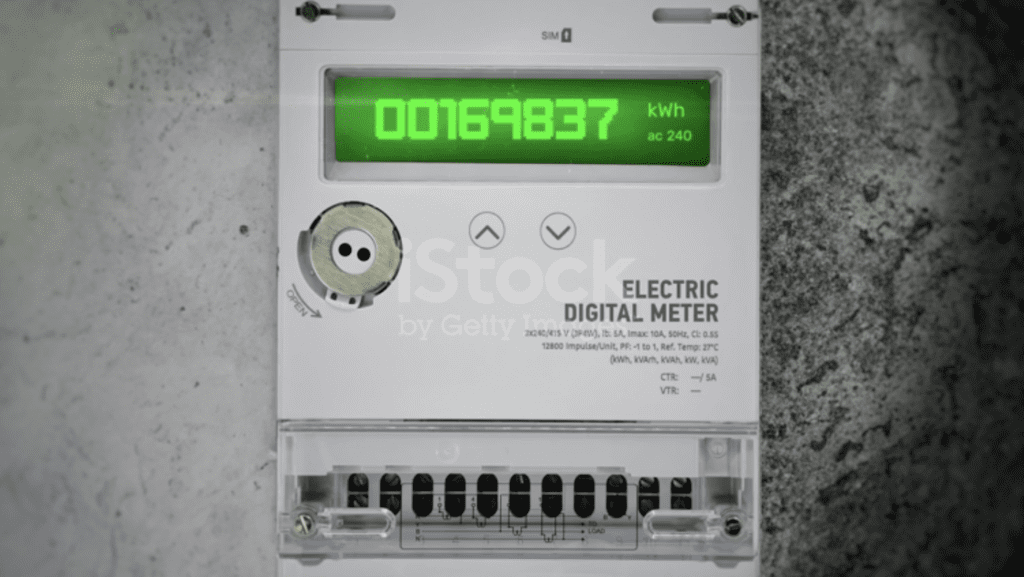
Understanding how to use a kWh to watts calculator is essential for any US homeowner or electrician trying to manage electrical loads, size breakers, and purchase the right equipment for residential applications. While kilowatt-hours (kWh) and watts measure different aspects of electrical energy, knowing how to convert between them helps you make informed decisions about your home’s power consumption and safety. This guide breaks down the relationship between these two electrical units and shows you exactly how to use a kWh to watts calculator to solve real-world problems.
What’s the Difference Between Kilowatt-Hours and Watts?
Before you can effectively use a kWh to watts calculator, you need to understand what each term means. Watts (W) measure the rate of electrical power consumption at a given moment — think of it as how fast electricity is being used right now. A 1,500-watt space heater, for example, consumes 1,500 watts of power when it’s running.
Kilowatt-hours (kWh), by contrast, measure total energy consumption over time. One kilowatt-hour equals 1,000 watts used for one hour. Your electric utility company measures your monthly home consumption in kWh, which is why your bill shows something like “850 kWh this month.” Understanding this difference is critical for properly using any kWh to watts calculator.
Here’s the key distinction: watts tell you power demand at a specific moment, while kWh tells you cumulative energy usage. For residential applications in the United States, typical household appliances draw between 1 amp and 50 amps at either 120V or 240V, translating to wattage ranges from about 120 watts to 12,000 watts depending on the appliance.
How Does a KWh to Watts Calculator Work?
A kWh to watts calculator converts kilowatt-hours into watts using the relationship between time, energy, and power. The fundamental formula is straightforward: Watts = (Kilowatt-Hours × 1,000) ÷ Hours. This means you multiply your kWh figure by 1,000 and divide by the number of hours the appliance or system ran.
For example, if your air conditioning system consumed 15 kWh over a 24-hour period, you would calculate: (15 × 1,000) ÷ 24 = 625 watts of average power consumption. This type of calculation helps homeowners understand whether they need to upgrade their electrical service or add additional circuits.
Additionally, understanding this conversion is crucial when you’re planning upgrades like installing an EV Charging Load Calculator for Your Home | Free Tool, which calculates the continuous watts required by your charging system. The free electrical load calculator at myelectriccalc.com can simplify these calculations for you instantly.
Why US Homeowners Need This Calculator
American homeowners use a kWh to watts calculator for several practical reasons related to electrical safety and cost management. According to the U.S. Energy Information Administration, the average American household consumed 10,632 kWh in 2021, which translates to an average power demand that varies throughout the day.
Here are the main reasons you’ll need to understand and use a kWh to watts calculator:
- Determining whether your home’s main electrical panel can handle the load when adding new appliances or circuits, especially when planning larger installations that require calculating proper breaker sizes according to NEC code.
- Calculating the average watts an appliance uses to estimate monthly electricity costs and identify energy-hogging devices in your home that drive up utility bills.
- Sizing backup generators correctly by converting your home’s daily kWh consumption into peak wattage requirements, as covered in our Generator Sizing Calculator for Home: Complete Guide.
- Verifying that wire gauges and breaker ratings are appropriate for the actual power demands of appliances using NEC standards, such as the 125% continuous load rule.
- Planning solar panel systems by converting your annual kWh usage into the average daily watts you need to generate for energy independence.
- Understanding your electric bill by converting the kWh charges into actual power consumption patterns throughout the month.
Real-World Examples Using a KWh to Watts Calculator
Let’s walk through practical residential examples where homeowners and electricians use a kWh to watts calculator to solve actual problems.
Example 1: Air Conditioning System Evaluation
Suppose your home’s cooling system ran for 8 hours during a hot summer day and consumed 18 kWh. Using the calculator: (18 × 1,000) ÷ 8 = 2,250 watts average power draw. This means your AC system requires a dedicated 240V circuit with adequate breaker size. For a 2,250-watt load at 240V, you’d calculate amps as 2,250 ÷ 240 = 9.4 amps, which would typically require a 20-amp breaker and 12 AWG wire. For more detailed AC load calculations, check our Electrical Load Calculator for AC Units: Complete Guide.
Example 2: Electric Water Heater Planning
An electric water heater consumed 12 kWh over a 4-hour period one evening. The kWh to watts calculator reveals: (12 × 1,000) ÷ 4 = 3,000 watts. At 240V, that’s 3,000 ÷ 240 = 12.5 amps continuous load. According to the NEC 125% rule for continuous loads, you’d multiply 12.5 × 1.25 = 15.6 amps, requiring a 20-amp breaker and 12 AWG wire.
Example 3: Residential Solar System Sizing
If your home uses 900 kWh monthly, that’s 900 ÷ 30 days = 30 kWh daily. Converting to average watts: (30 × 1,000) ÷ 24 hours = 1,250 watts average continuous demand. A solar installer would use this information to determine how many panels and inverter capacity you’d need.
Understanding Common US Residential Electrical Standards
When using a kWh to watts calculator, it’s essential to understand how US electrical standards apply. American residential homes operate on 120V single-phase for standard outlets and lighting, with 240V available for large appliances. Standard residential breaker sizes are 15A, 20A, 30A, 40A, 50A, 60A, 100A, 150A, and 200A.
The NEC (National Electrical Code) governs all electrical installations. Once you calculate watts using a kWh to watts calculator, you convert to amps using Ohm’s Law: Amps = Watts ÷ Volts. Then you apply the 125% rule for continuous loads (anything running 3+ hours). This ensures your breaker and wire size match the actual demand safely.
For commercial applications, you may want to reference our Commercial Electrical Load Calculator Explained, though most homeowners focus on residential 120V/240V systems.
Using MyElectricCalc’s Free Tools
Related Articles You Might Find Useful